Work / Per Diem
Work / Per Diem
Reduced per diem setup from 2 days to 20 minutes,
helping drive growth in Europe
Reduced per diem setup from 2 days to 20 minutes, helping drive growth in Europe
Zoho Expense
Zoho Expense
April 2024
April 2024
Impact at a glance
Impact at a glance
Before we get into the depths of this case study, here are some metrics to display the impact this feature had on both the business and also user experience.
Before we get into the depths of this case study, here are some metrics to display the impact this feature had on both the business and also user experience.
75% more signups
75% more signups
30% more retention
30% more retention
60x faster setup
60x faster setup
90% drop in support
90% drop in support
The problem statement
The problem statement
European companies need to manage per diem (daily travel allowances) according to government-mandated rates. But those rates vary by country, by city within countries, and by rule type (duration, time-of-day, travel day splits, etc.).
Our per diem module could handle only basic duration-based rates. That made evaluation friction a blocker for adoption in Europe.
European companies need to manage per diem (daily travel allowances) according to government-mandated rates. But those rates vary by country, by city within countries, and by rule type (duration, time-of-day, travel day splits, etc.).
Our per diem module could handle only basic duration-based rates. That made evaluation friction a blocker for adoption in Europe.
My role
My role
We were a team of 1 UX designer, 1 UI designer, 2 engineers. I was tasked with taking the feature from definition to roll out this feature in a timeline of 2 months. We had to read through 100s of government published documents to understand how each country functioned.
We were a team of 1 UX designer, 1 UI designer, 2 engineers. I was tasked with taking the feature from definition to roll out this feature in a timeline of 2 months. We had to read through 100s of government published documents to understand how each country functioned.
The context
The context
Per diems are daily allowances that were provided by the businesses to their employees who were travelling out of office to manage their stay and food expenses. This was a statutory requirement that was set by the government bodies to ensure that employees were compensated fairly for their travel.
Per diems are daily allowances that were provided by the businesses to their employees who were travelling out of office to manage their stay and food expenses. This was a statutory requirement that was set by the government bodies to ensure that employees were compensated fairly for their travel.
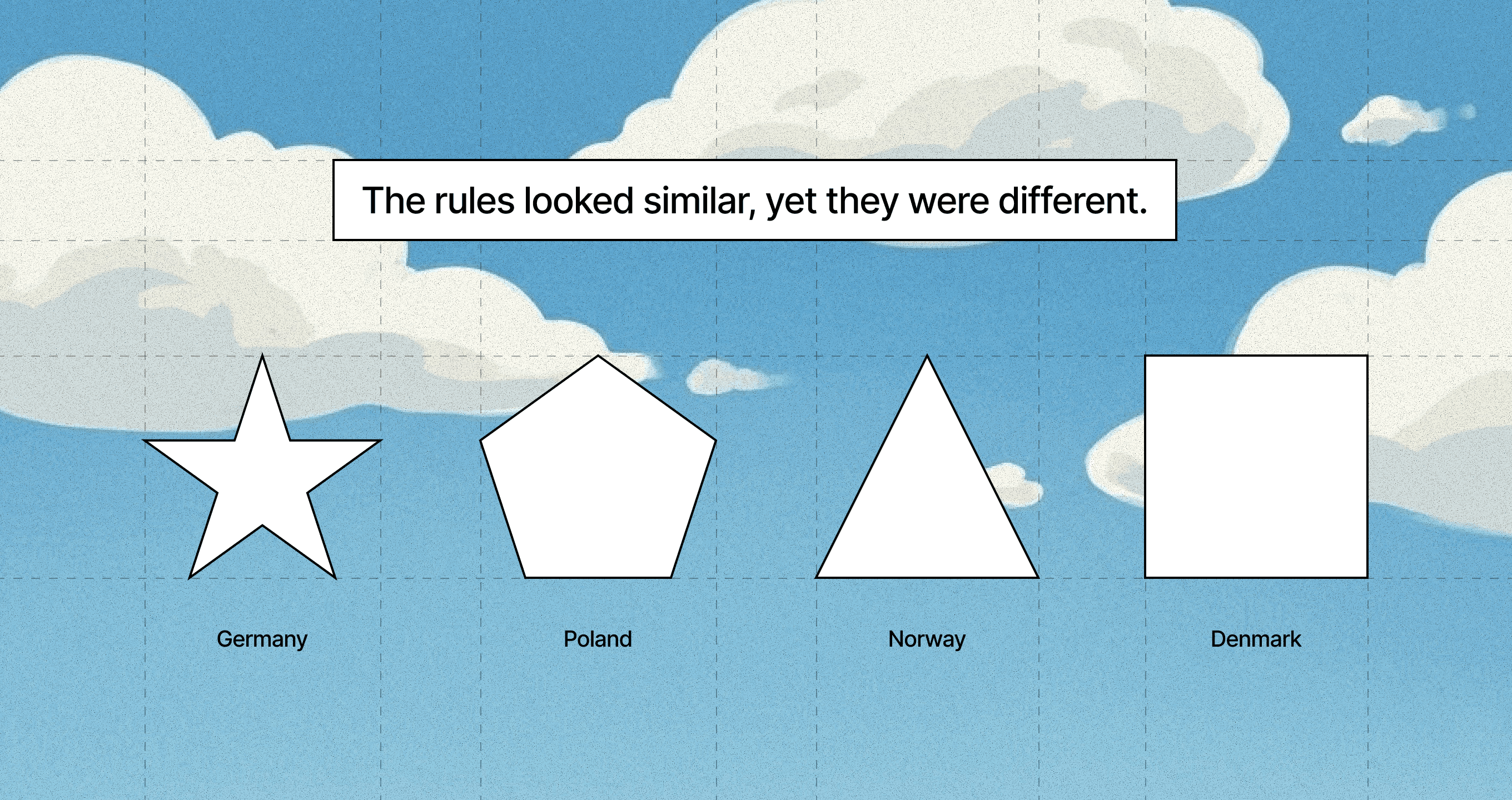
Per diem rules are rarely simple. A real example from Germany, which had 4 rules :
Rule 1: If traveling a full day, employee gets €28
Rule 2: If arriving/departing, employee gets 50% (€14)
Rule 3: If traveling between 8–24 hours, employee gets €14
Rule 4: If traveling under 8 hours, employee gets €0
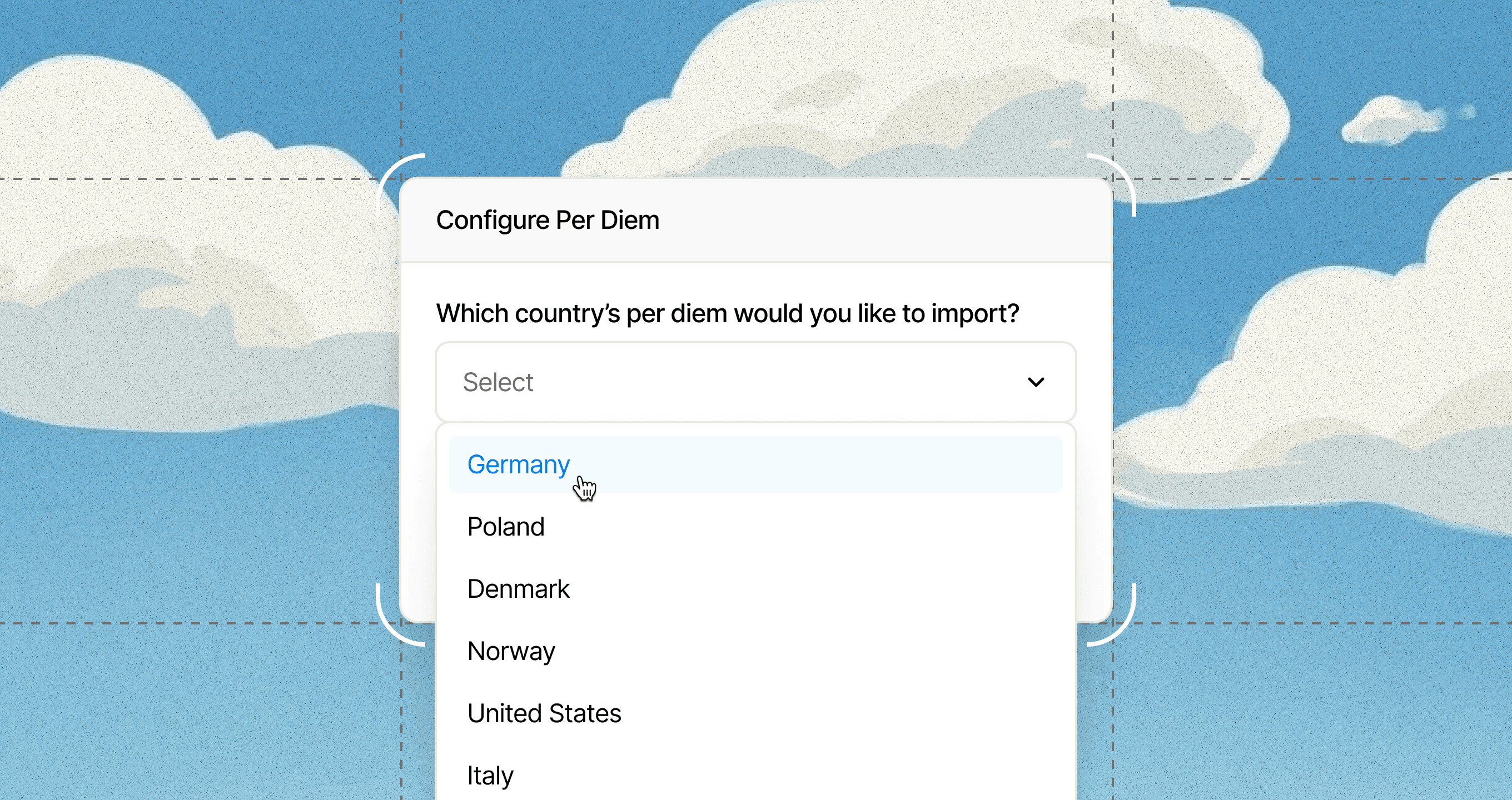
That's just one country. Poland has different rules. Denmark has different rules.
Per diem rules are rarely simple. A real example from Germany, which had 4 rules :
Rule 1: If traveling a full day, employee gets €28
Rule 2: If arriving/departing, employee gets 50% (€14)
Rule 3: If traveling between 8–24 hours, employee gets €14
Rule 4: If traveling under 8 hours, employee gets €0
That's just one country. Poland has different rules. Denmark has different rules.
4 key findings
4 key findings
We talked to our internal pre-sales, implementation partners and also customers to understand how per diems were being configured and managed their teams currently. We identified 4 key issues in the existing per diem feature within Zoho Expense.
Duration based one dimensional rule engine that did not scale with the European rules
Employees spent out of their pocket and businesses had very little control
Error prone custom workarounds implemented over 2 weeks and policy pollution
No trace of who changed what, when rates change every year
We talked to our internal pre-sales, implementation partners and also customers to understand how per diems were being configured and managed their teams currently. We identified 4 key issues in the existing per diem feature within Zoho Expense.
Duration based one dimensional rule engine that did not scale with the European rules
Employees spent out of their pocket and businesses had very little control
Error prone custom workarounds implemented over 2 weeks and policy pollution
No trace of who changed what, when rates change every year
Design Iterations
Design Iterations
When we got the problem statement, we quickly started working on multiple possible solutions and we did not get it right on the first try.
When we got the problem statement, we quickly started working on multiple possible solutions and we did not get it right on the first try.
Version 1 : City specific rule configuration
Version 1 : City specific rule configuration
Admins could configure city level granular rules with a combination of travel hours and travel days but this did not scale as soon as we started testing with businesses that had 50 different rates.
Admins could configure city level granular rules with a combination of travel hours and travel days but this did not scale as soon as we started testing with businesses that had 50 different rates.
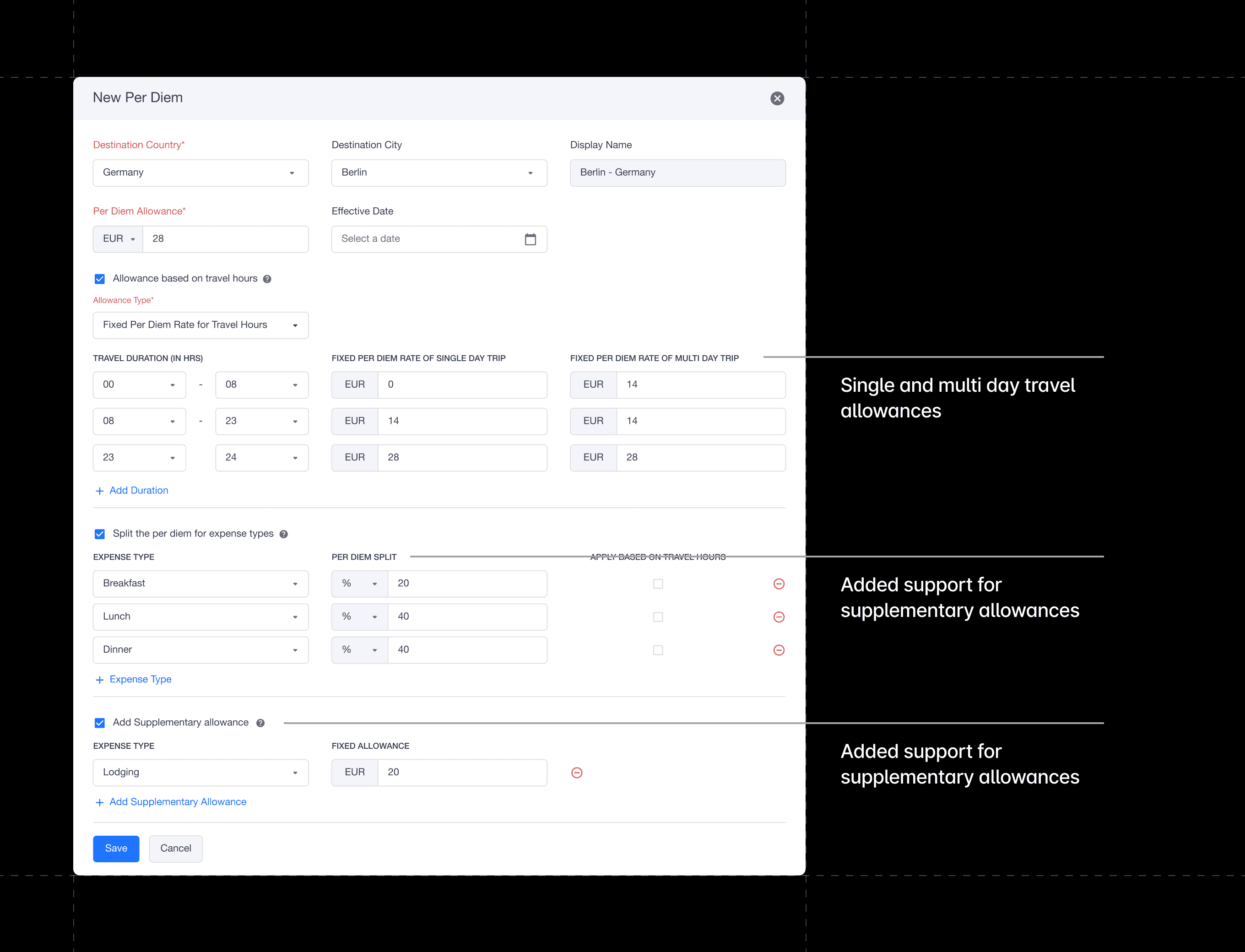
The reason this failed was admins still had to configure every city one by one which again meant tedious work and also the possibility of error.
The reason this failed was admins still had to configure every city one by one which again meant tedious work and also the possibility of error.
Version 2 : Robust rule engines with international-domestic divide
Version 2 : Robust rule engines with international-domestic divide
Upon analysing further we found a pattern where most of the countries had 2 rule sets, one for domestic cities and another for international cities. This meant that we could reuse the same grouping within Zoho Expense for better experience.
Upon analysing further we found a pattern where most of the countries had 2 rule sets, one for domestic cities and another for international cities. This meant that we could reuse the same grouping within Zoho Expense for better experience.
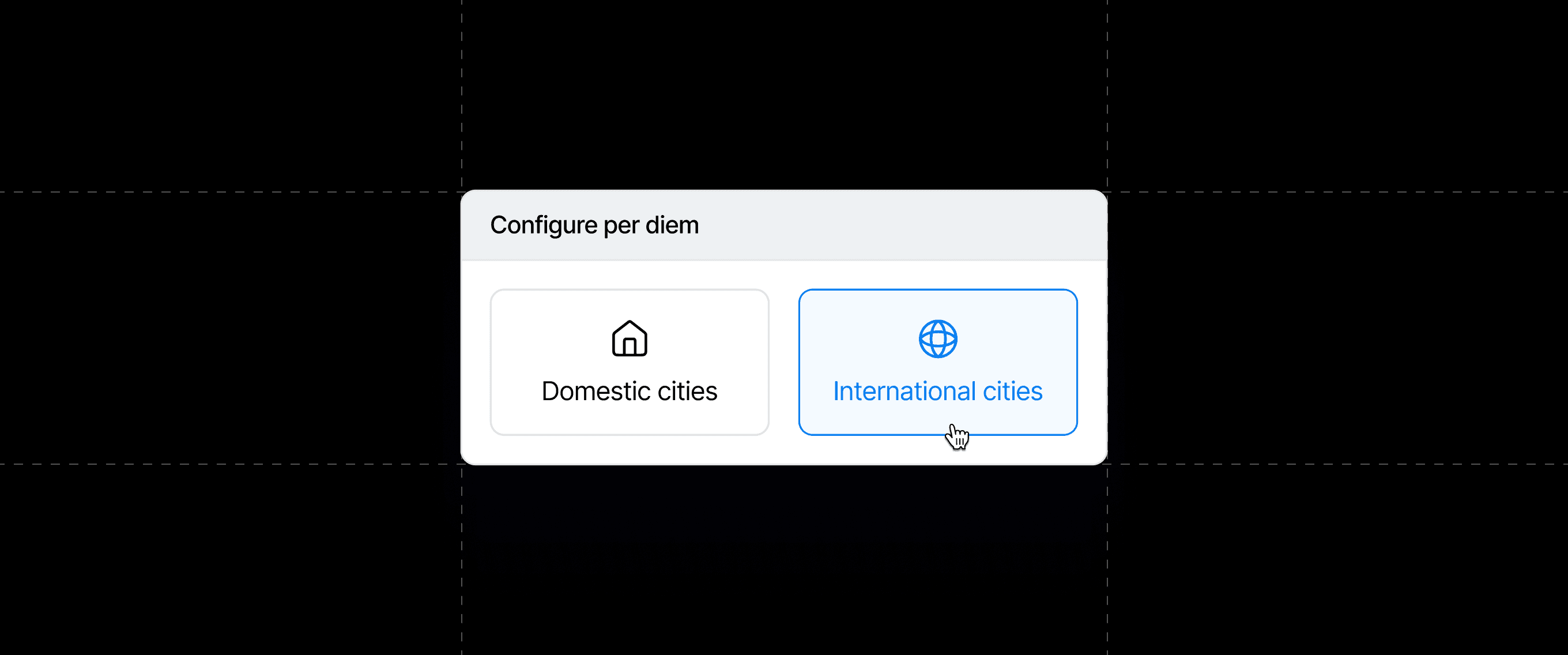
So we split the per diem setup into 2 parts, one for domestic and another for international with common rules for each groups. We also built a comprehensive rule engine that allowed businesses to configure complex rules with almost any combination they needed.
So we split the per diem setup into 2 parts, one for domestic and another for international with common rules for each groups. We also built a comprehensive rule engine that allowed businesses to configure complex rules with almost any combination they needed.
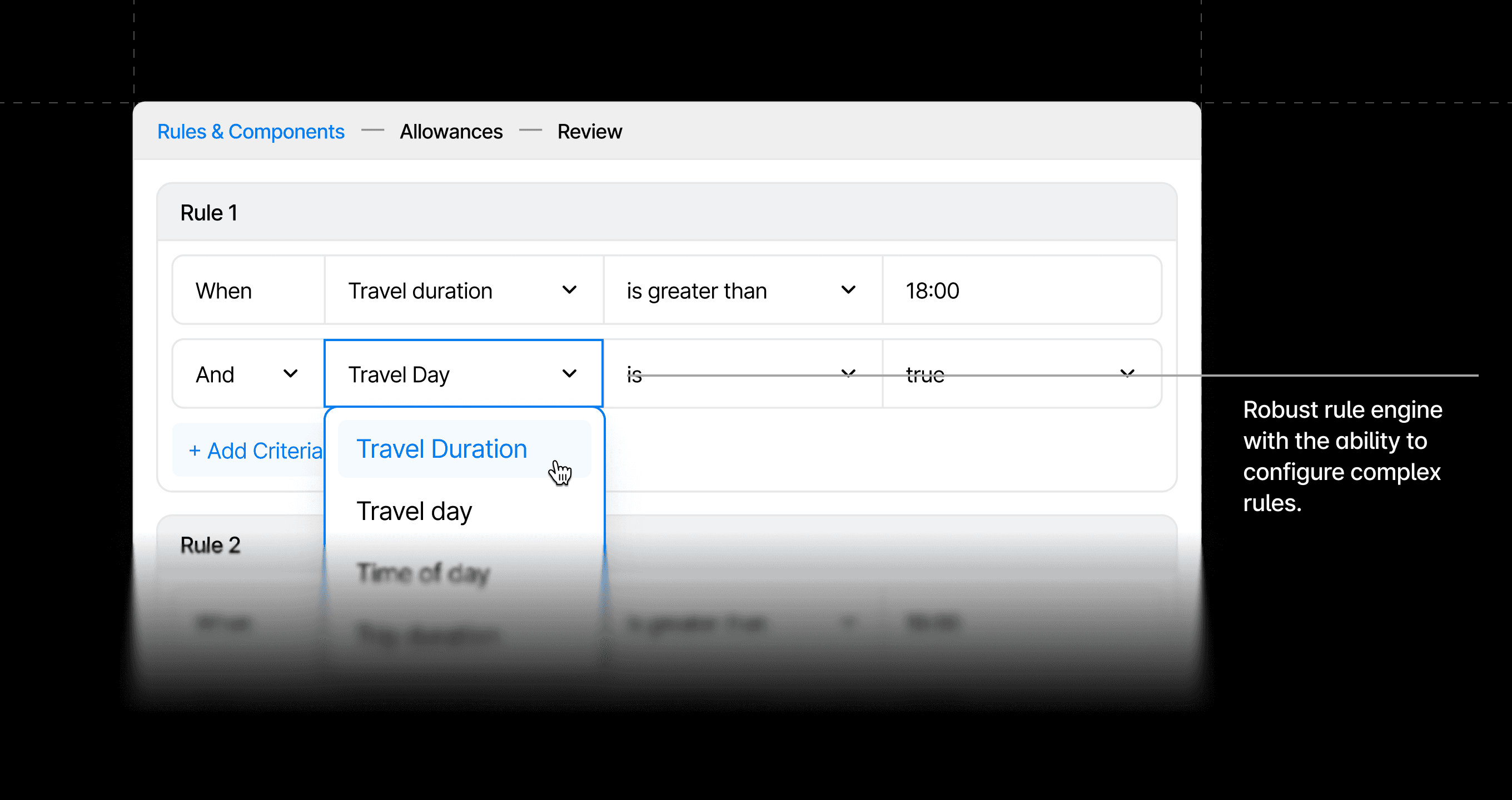
While testing this approach it worked well for almost every European country but a few and failed for other businesses because they grouped their allowances by multiple regions like Asia/Middle East/Africa/Americas.
What worked was the rule engine. What didn’t work was the international-domestic grouping.
While testing this approach it worked well for almost every European country but a few and failed for other businesses because they grouped their allowances by multiple regions like Asia/Middle East/Africa/Americas.
What worked was the rule engine. What didn’t work was the international-domestic grouping.
Version 3 : Bulk setup with free groups, quick import and rule templates
Version 3 : Bulk setup with free groups, quick import and rule templates
In the third iteration we decided to ditch the split and have a freeform approach where admins can add rates in bulk for cities that have a common rule set. This reduced the configuration time from what would take days to just minutes.
In the third iteration we decided to ditch the split and have a freeform approach where admins can add rates in bulk for cities that have a common rule set. This reduced the configuration time from what would take days to just minutes.
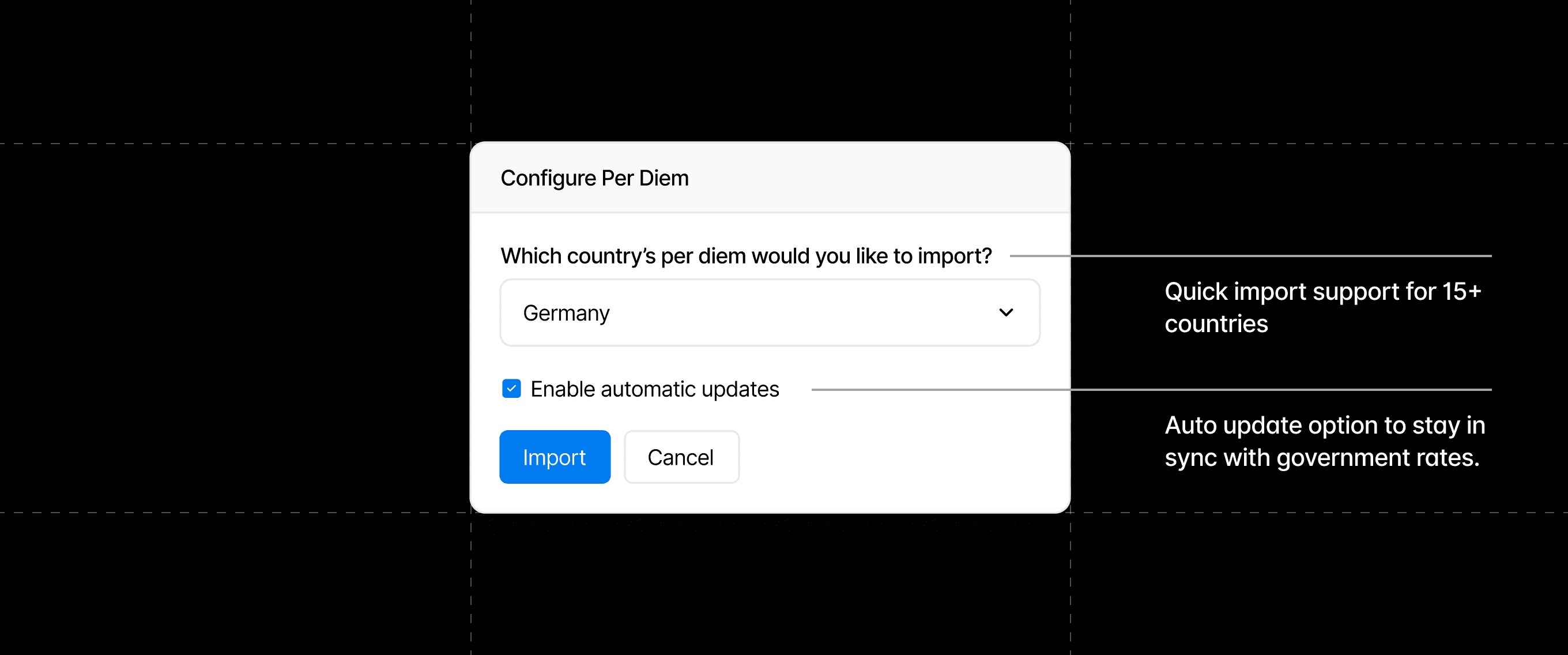
We also introduced 2 additional features in the form of quick import and also rule templates, these were very helpful for SMBs that were happy with using government suggested rules as is without any modification.
The rule templates more so for enterprises since they had to use custom rates and rules across different policies. They could just pick a predefined rule or a custom rule that has been added to the templates set.
We also introduced 2 additional features in the form of quick import and also rule templates, these were very helpful for SMBs that were happy with using government suggested rules as is without any modification.
The rule templates more so for enterprises since they had to use custom rates and rules across different policies. They could just pick a predefined rule or a custom rule that has been added to the templates set.
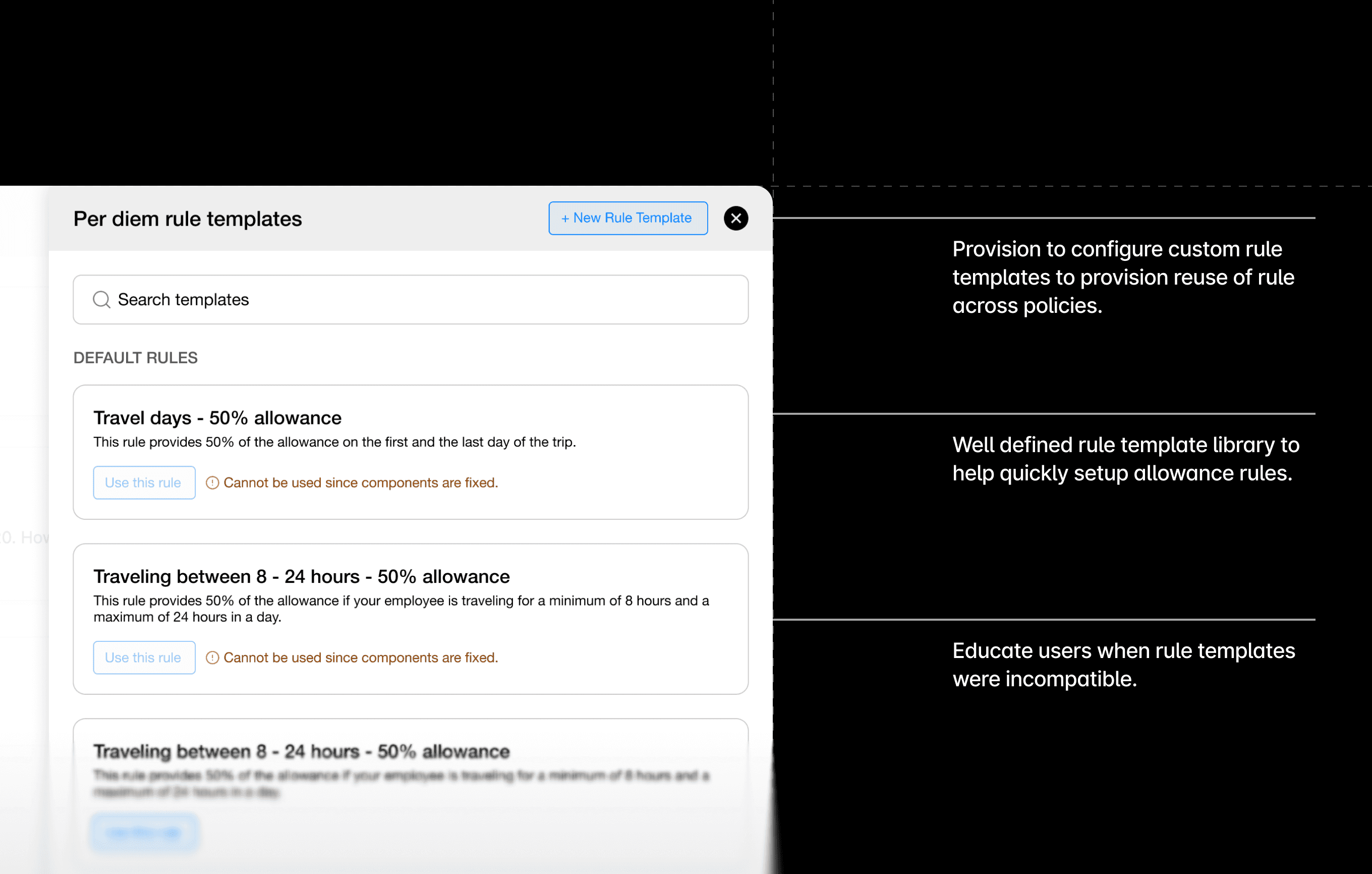
These 2 features saw the setup time go down even further in case of enterprises. We also added another most requested feature that is audit trail for per diems. This allowed admins to see what was changed and who changed it.
These 2 features saw the setup time go down even further in case of enterprises. We also added another most requested feature that is audit trail for per diems. This allowed admins to see what was changed and who changed it.
3rd time lucky : What made it stick?
3rd time lucky : What made it stick?
Out of the 3 approaches were tried version 3 that allowed bulk setup, quick import and rule templates succeeded because it worked for different customer types simultaneously:
SMBs could import a template and be done in 2 minutes
Enterprises were able to build complex rules and audit changes
Global companies could organise by their own regional structure.
Finance teams were able to track and verify configuration history.
Out of the 3 approaches were tried version 3 that allowed bulk setup, quick import and rule templates succeeded because it worked for different customer types simultaneously:
SMBs could import a template and be done in 2 minutes
Enterprises were able to build complex rules and audit changes
Global companies could organise by their own regional structure.
Finance teams were able to track and verify configuration history.
Impact
Impact
As mentioned in the beginning of this case study, this feature had a sizeable impact on the business and the user experience. We were able to see a 75% increase in sign ups and 30% increase in user retention.
The user experience impact was even bigger where the setup time went from 2 days to 20 minutes (that is roughly a 60x increase in speed) and we saw a drastic drop in support queries about configuring per diem, almost 90%.
We were also able to get a couple of testimonials that capture the power and impact of this updated design.
As mentioned in the beginning of this case study, this feature had a sizeable impact on the business and the user experience. We were able to see a 75% increase in sign ups and 30% increase in user retention.
The user experience impact was even bigger where the setup time went from 2 days to 20 minutes (that is roughly a 60x increase in speed) and we saw a drastic drop in support queries about configuring per diem, almost 90%.
We were also able to get a couple of testimonials that capture the power and impact of this updated design.
"We were able to quickly set up per diem with just a click within Zoho Expense, all by ourselves without having to ask for any external help and it worked seamlessly."
"We were able to quickly set up per diem with just a click within Zoho Expense, all by ourselves without having to ask for any external help and it worked seamlessly."
Newly onboarded Business Owner, Poland (SMB)
Newly onboarded Business Owner, Poland (SMB)
"Finally, we were able to configure rates for cities across the world inside a single policy. Our policies went down from 50 to just 8."
"Finally, we were able to configure rates for cities across the world inside a single policy. Our policies went down from 50 to just 8."
CFO of an existing enterprise customer, Germany
CFO of an existing enterprise customer, Germany
Things I learnt and closing thoughts
Things I learnt and closing thoughts
This project was one of the largest I have worked on in terms of scale and impact. This reinforced 3 important lessons that shape how I design now.
This project was one of the largest I have worked on in terms of scale and impact. This reinforced 3 important lessons that shape how I design now.
Compliance requirements does not necessarily mean complicated user journeys. Keeping it simple goes a long way.
The importance of audit and tracability for enterprise businesses because the systems are usually too complex and everything is just lost.
Iterating and failing fast is the best way to learn because we get to test our assumption and see what sticks and what does not.
Compliance requirements does not necessarily mean complicated user journeys. Keeping it simple goes a long way.
The importance of audit and tracability for enterprise businesses because the systems are usually too complex and everything is just lost.
Iterating and failing fast is the best way to learn because we get to test our assumption and see what sticks and what does not.
By redesigning per diem management around flexible rules, faster setup, and stronger governance, we turned a regional adoption blocker into a product capability that helped Zoho Expense grow more credibly in Europe.
By redesigning per diem management around flexible rules, faster setup, and stronger governance, we turned a regional adoption blocker into a product capability that helped Zoho Expense grow more credibly in Europe.
Vendor Batch Payments
Vendor Batch Payments
Zoho ERP Beat app
Zoho ERP Beat app